.svg)





.avif)
The care you give yourself in the days after implant surgery has a real effect on how smoothly you heal. The good news is that the essentials are straightforward and entirely manageable at home. Below are practical, general tips for handling the most common parts of recovery, from swelling and discomfort to gentle oral care. As always, the specific instructions Dr. Stone gives you come first and override any general advice, because they are designed around your exact treatment.

Managing Swelling
Some swelling is a normal and expected part of healing, and it usually peaks within the first two to three days before subsiding. To keep it manageable, many surgeons recommend applying a cold compress to the outside of your cheek in intervals during the first day or two, and resting with your head slightly elevated, including while you sleep. Follow the specific schedule your surgeon gives you. If swelling continues to increase after the first few days rather than improving, that is worth a call to the office, as it can occasionally signal a problem worth checking.
Managing Discomfort
Mild to moderate soreness is expected, especially during the first 48 hours. Take any prescribed or recommended medication exactly as directed, and stay on schedule rather than waiting until discomfort builds, since staying ahead of it is far more comfortable than catching up. Rest, soft foods, and cold compresses all contribute to keeping you comfortable. Most patients find their discomfort fades noticeably after the first few days, then continues to ease from there.
Handling Minor Bleeding
A small amount of bleeding or oozing in the first day is normal. Your surgeon may have you gently bite on gauze for a period to help. Avoid forceful spitting, vigorous rinsing, and suction from straws, all of which can disturb the area. If you experience heavy or persistent bleeding that does not slow with the steps your surgeon described, contact the office.
Gentle Oral Care
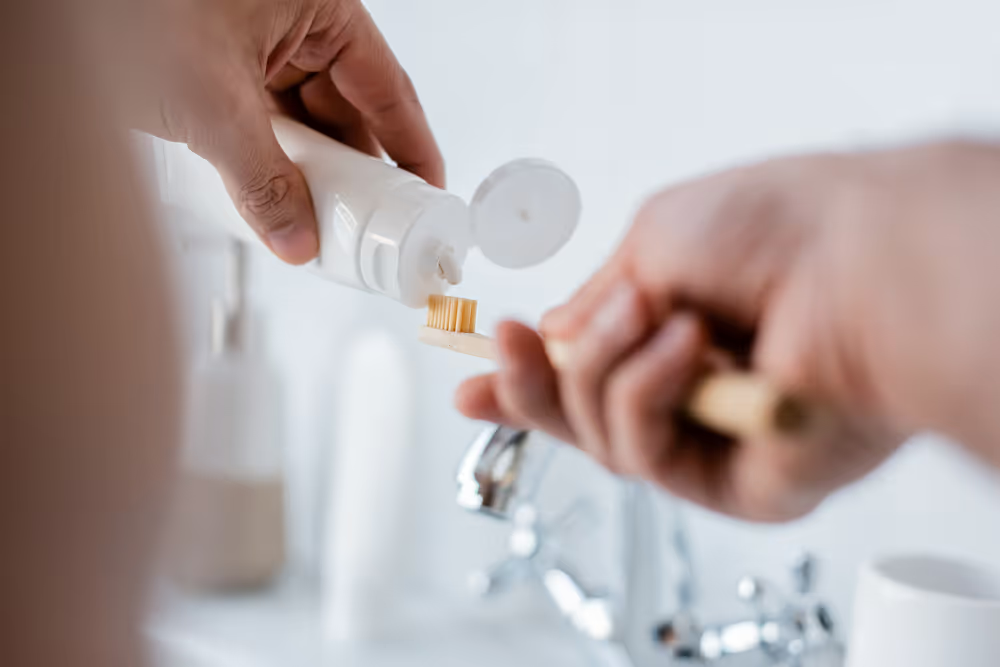
Keeping your mouth clean is important for healing, but in the early days it must be done gently and carefully around the surgical sites. Your surgeon will tell you when and how to resume rinsing and brushing. This often includes gentle saltwater rinses or a prescribed rinse rather than vigorous swishing, and brushing carefully while avoiding the surgical area directly until you are cleared to clean it normally. Disturbing the site too aggressively too soon can set healing back, so patience and a light touch serve you well here.
Rest and Activity
Give your body the time it needs to heal. Plan to take it easy for the first several days and avoid strenuous exercise, heavy lifting, and bending over for the period your surgeon recommends, since these can increase swelling and the risk of bleeding. Easing back into your routine gradually is the safest approach, and most patients find they can return to normal activity sooner than they expected when they do not rush it.
Simple Do's and Don'ts
- Do rest, hydrate, eat soft nourishing foods, and follow your instructions precisely.
- Do apply cold compresses and keep your head elevated early on.
- Don't smoke, which significantly slows healing and raises risk.
- Don't use straws, spit forcefully, or rinse vigorously in the first days.
- Don't skip follow-up appointments, even if you feel fine.
Managing Day-to-Day Comfort
Small comforts add up during recovery. Keep your lips moisturized if they feel dry, stay hydrated throughout the day, and avoid touching or pressing on the swollen areas. Loose, comfortable clothing and a calm, low-effort routine help you rest more fully. If you wear any dental appliance, follow your surgeon's guidance on when and how to use it. None of these steps are complicated, but together they make the early days noticeably more pleasant while your body does its work.
Protecting Your Long-Term Result
Once you are healed, your implants are cared for much like natural teeth: regular brushing, cleaning between teeth as directed, and routine professional checkups to keep everything healthy. Two of the most powerful things you can do to protect your investment over the long term are avoiding smoking and keeping up with your follow-up and maintenance visits. With consistent care, implants are built to serve you well for many years.
Sleeping and Resting Comfortably
Rest is one of your most powerful healing tools, and a few adjustments make it easier in the first days. Sleeping with your head slightly elevated on extra pillows helps reduce swelling overnight. Many patients find the first night or two more comfortable in a semi-reclined position. Keep water and any needed medication within reach so you are not getting up unnecessarily, and give yourself permission to nap and take it easy. Your body does much of its healing while you rest.
Caring for the Surgical Site
In the early days, treat the surgical area with a light touch. Avoid exploring it with your tongue or fingers, resist the urge to check it repeatedly, and keep it free of trapped food as your surgeon directs. When you begin cleaning near the area, do so gently and exactly as instructed. Letting the site rest undisturbed is one of the simplest and most effective ways to support smooth healing.
Setting Yourself Up for Success
A smooth recovery is easier when your environment is ready. Keep soft foods, cool drinks, gauze, and any medication organized and within reach. Plan for a quieter few days without strenuous commitments, and arrange help if you have young children or physically demanding responsibilities. A little preparation removes friction at the moment you most want to simply rest and heal.
Signs You Should Call the Office
Most recoveries are uneventful, but contact your surgeon promptly if you notice severe or worsening pain after the first few days, heavy or persistent bleeding, swelling that increases instead of improving, a fever or other signs of infection, or anything that simply does not feel right. Calling early is always the correct choice. You can reach Stone Dental Implant Center at 817-383-8361.