.svg)





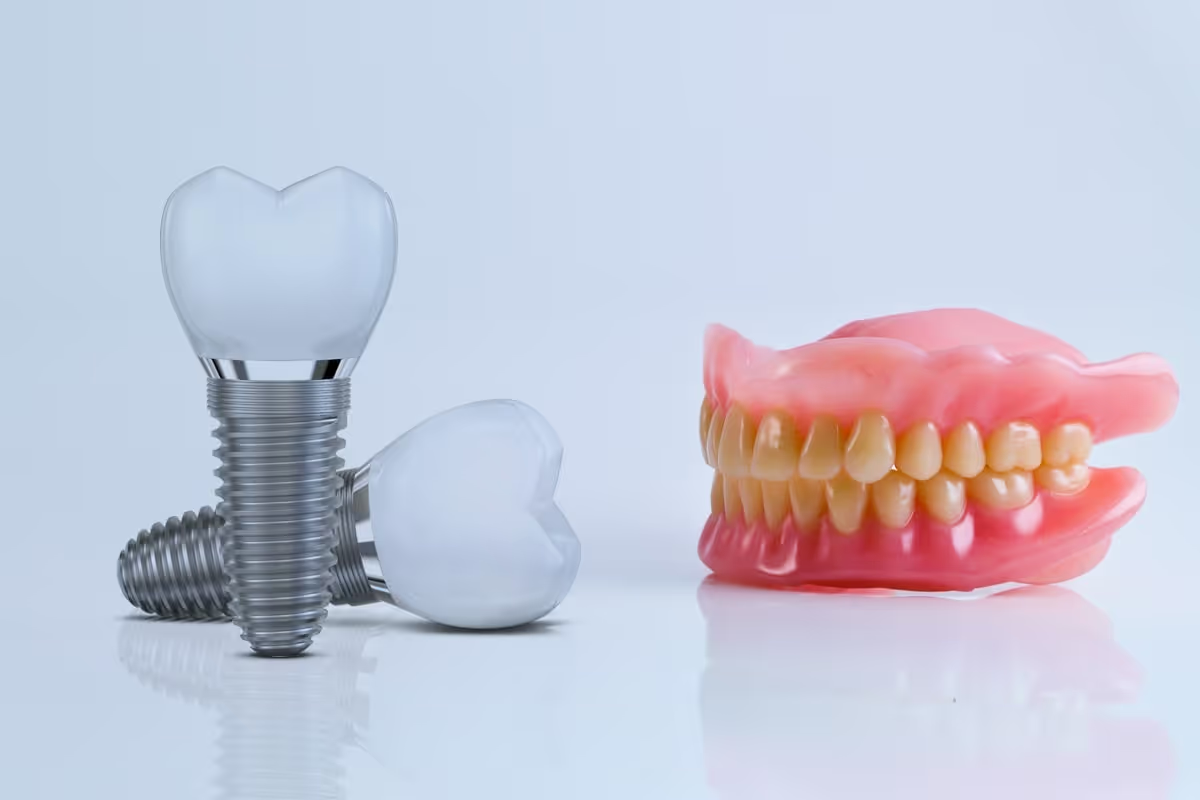
If you have researched full-arch tooth replacement, you have seen the promises everywhere: new teeth in a day, a brand new smile in a single visit. These claims are not untrue, but they leave out important detail that every patient deserves to understand before committing. Knowing what same-day actually means, and how it fits into the larger All-on-X process, is the difference between a decision based on a slogan and a decision based on facts.
What All-on-X Really Means
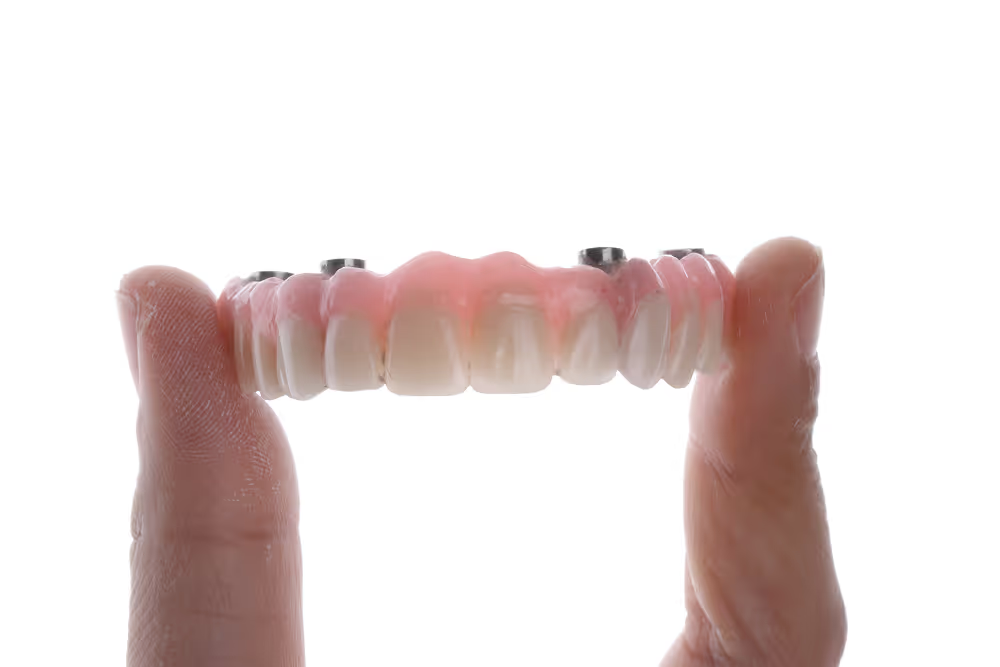
All-on-X is a method of replacing a full arch of teeth using a small number of strategically placed implants, most often four or six. The X simply refers to the number of implants used. Instead of placing one implant for every missing tooth, the entire arch is anchored on these few precisely positioned posts. This approach makes full-mouth restoration possible for many people who were previously told they had too few teeth, or too little bone, for traditional implant treatment.
The term same-day refers to one specific part of this process: leaving your appointment with a fixed set of temporary teeth on the day of surgery, rather than going home toothless while you heal. It is a wonderful benefit, but it is one stage of a longer journey, not the entire story.
The Timeline Difference, Explained Honestly
Here is the part that marketing tends to simplify. There are typically three phases:
- Same-day, also called immediate load: On the day of surgery, your implants are placed and a temporary, fixed set of teeth is attached. You leave with a full smile. This temporary set is engineered for the healing phase, not as your permanent result.
- The healing phase: Over the next several months, the implants gradually fuse with your bone through osseointegration. You wear and function on the temporary teeth during this time.
- The final restoration: Once your surgeon confirms healing is complete, the temporary teeth are replaced with your final, custom prosthesis, crafted from stronger and more refined materials.
So new teeth in a day is real, but those first teeth are a beautiful starting point rather than the finish line. Understanding this prevents disappointment and sets realistic expectations.
Why Materials Matter
Temporary prosthetics are usually made from acrylic, chosen because it is lighter and easier to adjust during the healing period when small changes are common. Final restorations are typically made from more durable, lifelike materials such as zirconia, engineered for long-term strength, stain resistance, and a natural appearance. This distinction is precisely why the process has two stages, and why the final result is worth the wait. A provider who explains this clearly is one who is setting you up to be satisfied years down the road, not just on day one.

Is Immediate Load Right for Everyone?
Same-day teeth are not appropriate for every patient. Immediate load depends on having enough healthy bone and achieving sufficient implant stability at the moment of surgery. In some cases, a staged approach, where the implants are allowed to heal before teeth are attached, is the safer and smarter path. This is not a downgrade. It is a clinical judgment made in your best interest, and a careful surgeon will recommend it when it gives you the strongest long-term outcome. A thorough 3D evaluation is what makes this decision possible.
What to Ask Before You Commit
Speed is appealing, but the questions that genuinely predict a great outcome are about planning and expertise, not the calendar:
- Who is placing the implants, and what is their surgical training and experience?
- Will I receive both a temporary and a final restoration, and what materials are used for each?
- How are my bite, jaw, and facial structure factored into the design of my new teeth?
- What is the realistic full timeline from surgery to my final teeth?
- What happens if an adjustment is needed during healing?
Caring for Your New Teeth Over Time
Once your final restoration is in place, caring for All-on-X teeth is refreshingly straightforward, though it does differ slightly from natural teeth. You will brush daily, clean underneath and around the prosthesis as your provider shows you, and keep up with regular professional visits so your implants and gums stay healthy. These maintenance appointments also let your provider check the fit and condition of the restoration over the years. With consistent care, full-arch restorations are built to serve you reliably for a very long time.
Why One Surgeon From Start to Finish Matters
Full-arch treatment involves many steps, from planning and surgery to healing and the final restoration. When a single surgeon oversees the entire journey, nothing falls through the cracks between providers, and the person who designed your plan is the same person accountable for your result. That continuity is easy to overlook when comparing options, but it has a real effect on both the experience and the outcome. It is a quiet advantage worth asking about wherever you consider treatment.
The Stone Approach
At Stone Dental Implant Center, Dr. Mona Stone plans All-on-X cases around your facial structure, jawline, and lip line, not just the teeth in isolation. With a background that bridges surgical and aesthetic training, she treats full-arch restoration as facial design, where the position of your teeth shapes how your whole face looks and ages. One surgeon guides your care from start to finish, which means continuity and accountability at every step.
Same-day teeth are a meaningful part of that journey, but the real difference is found in the planning that shapes your final result. If you are weighing your options, a consultation will give you a clear, personalized timeline and an honest picture of what to expect, with no slogans attached.